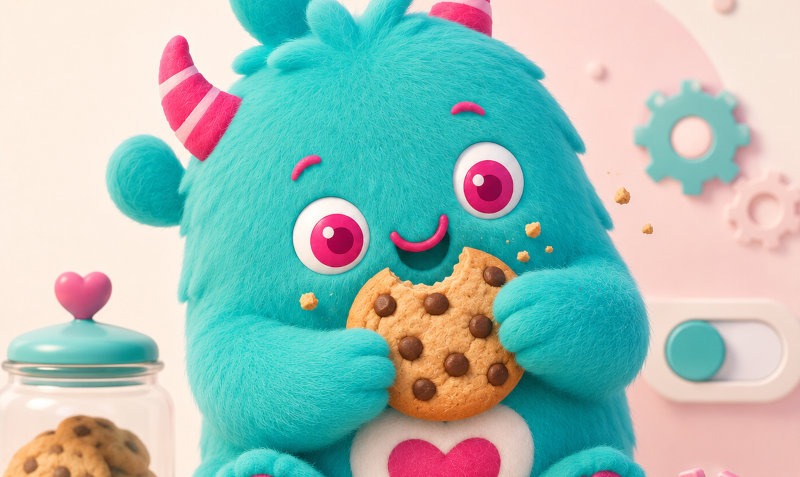

If you searched for easy drawings for 4-year-olds, you’re probably hoping for something very down-to-earth: ideas your child can truly manage (without everyone ending up frustrated), with supplies you already have, while you share a calm little moment together.
That’s exactly what this is for. Below you’ll find simple drawing prompts—houses, flowers, suns, monsters, animals, and people—split into small, kid-friendly steps. They’re meant to bend and wiggle. In our house, the best drawings are rarely the “perfect” ones; they’re the ones where my kid changes the colors, tweaks the shapes, and suddenly there’s a whole story happening. A circle is never just a circle for a 4-year-old—it can be a cookie, a planet, a baby chick, or a grandma’s smiling face depending on the mood.
Before you start: a tiny setup that makes drawing easier
I’ve learned drawing time usually goes smoother when I focus more on the space than on the “teaching.” A 4-year-old doesn’t need a long tutorial. They need comfort, a little time, and permission to try, mess up, and try again.
Simple materials (nothing fancy)
- Paper: printer paper, recycled envelopes, the back of junk mail, paper bags
- Drawing tools: crayons, washable markers, colored pencils, a regular pencil
- Extras (optional): stickers, glue stick, safety scissors, a ruler (for grown-ups), a black marker for outlining
A quick “no-pressure” rule that helps
If I could offer one phrase that changes the whole vibe, it’s this: “We’re just trying ideas today.” Not “Let’s make it pretty.” Not “Let’s do it right.” Just trying ideas. It takes the heavy feeling out of it—especially for kids who really want their drawing to match what’s in their head.
Little questions that keep the creativity flowing
Instead of fixing shapes, I like to ask story questions. (My mom was an artist, and she did this naturally—she’d treat every “mistake” like the start of a new idea.) Here are a few you can use for any drawing:
- “What should we name this?”
- “What is happening here?”
- “Where does it live?”
- “What does it like to eat?”
- “What happens next?”
Now, the fun part: easy drawing ideas that feel doable for a 4-year-old.
Easy drawings for 4-year-olds: 6 simple themes that always work
At four, many kids love bold shapes—circles, lines, dots, and those wonderful “wobbly squares.” Perfect. Each theme below is built from simple building blocks, plus a few gentle ways to personalize it so your child feels like the artist in charge.
1) A simple house (that can turn into a whole neighborhood)
A house is one of the best easy drawings for 4-year-olds because it’s basically a handful of shapes—and it invites storytelling immediately. In my experience, once one house appears, a street, a neighbor, and a pet usually aren’t far behind.
How to draw a house (kid-friendly steps)
- Draw a square or rectangle (tilted, bumpy, tiny—anything is fine).
- Add a triangle on top for the roof.
- Put in a door (a smaller rectangle) and a doorknob (a dot).
- Add windows (two squares or circles). Cross lines can make window panes.
- Draw a path from the door to the bottom of the page (two lines).
Make it your child’s own
- Add a chimney with “smoke” that looks like curly noodles.
- Give the roof silly patterns: stripes, polka dots, zigzags.
- Draw a pet looking out the window.
- Turn it into a treehouse, a castle, or a tiny house on wheels.
Questions to ask while they draw
- “Who lives in this house?”
- “What’s the best room in there?”
- “Is this a quiet house or a loud, party house?”
Everyday moment: Imagine your child drawing at the kitchen table while you’re nearby making a snack. You look over and notice the house has five doors because “everyone needs their own door.” That isn’t something to correct. That’s your child building a world.
2) Flowers (the easiest way to practice circles and lines)
Flowers are fast, cheerful, and easy to remix. They also let kids repeat shapes without it feeling like “practice.” In our family, my wife’s love of crafts means flowers often turn into a whole mixed-media moment—stickers, cut paper, and little scraps everywhere—but you can keep it as simple as crayons and one sheet of paper.
Three easy flower versions
- Lollipop flower: one circle + a straight line stem + two leaf ovals.
- Sunflower style: circle center + lots of short petal lines around it.
- Petal flower: a circle center + 5–8 oval petals around it.
Easy add-ons
- Draw a pot (a wide “U” shape) and fill it with soil dots.
- Add a ladybug (a small oval + dots) on a leaf.
- Make “night flowers” using dark paper and bright crayons.
Questions that spark imagination
- “Does this flower have a smell?”
- “Is it a tiny flower or a giant flower taller than us?”
- “Who comes to visit it—bees, butterflies, dragons?”
3) A sun (and a whole sky scene)
The sun feels safe to start with because it begins with one easy shape. After that, kids can build an entire scene around it—clouds, birds, rain, rainbows, whatever their day is feeling like.
How to draw a simple sun
- Draw a circle (a bumpy circle counts).
- Add rays: straight lines, triangles, or wavy lines.
- Add a face if your child likes (two dots and a smile).
Turn it into a sky your child can “enter”
- Add clouds (three or four connected bumps).
- Add birds (simple “M” shapes).
- Add rain (vertical lines) or snow (tiny X’s or dots).
- Draw a rainbow using big curved lines.
Questions to keep them talking
- “Is this a morning sun or an afternoon sun?”
- “Is the sun feeling sleepy or excited today?”
- “If you could ride a cloud, where would you go?”
One thing I try to remember (especially when a child is very sure about their choices): if they want to color the sun purple, it’s not “wrong.” It’s them exploring. A simple, warm question like “Tell me about your purple sun” often turns a potential argument into a sweet conversation.
4) Friendly monsters (because silly is a superpower)
Monsters are a wonderful escape hatch when a child gets stuck trying to draw “real” things. A monster can have three eyes, spaghetti arms, and a heart-shaped nose—and it’s still correct because it’s invented.
Easy monster recipe
- Choose a body shape: circle, oval, square, or a blob.
- Add eyes: one big eye, two eyes, or many tiny eyes.
- Add a mouth: smile, zigzag teeth, or a surprised “O.”
- Add arms and legs: lines, noodles, or triangles.
- Decorate: spots, stripes, horns, hair, or a bow tie.
Make it extra fun
- Give the monster a job: “This monster bakes cookies.”
- Draw its house: mushroom home, cave, or spaceship.
- Create a “monster family” with different sizes.
Questions that turn drawings into stories
- “What is this monster afraid of?”
- “What makes it laugh?”
- “Is it a shy monster or a dancing monster?”
Everyday moment: A grandparent gets a monster drawing as a gift—taped to a birthday card or slipped into a handbag. Weeks later it’s still on the fridge because the story (“He protects our snacks!”) is what everyone remembers, not the straightness of the lines.
5) Easy animals (from circles and ovals)
Animals are almost always a hit because kids already care about them. And the best part is you can draw lots of animals using the same few shapes, which helps your child feel confident quickly.
Three super-easy animals to start with
Cat (simple and cute)
- Draw a circle for the head.
- Add two triangles for ears.
- Add eyes (dots or small circles) and a triangle nose.
- Add whiskers (three lines on each side).
- Add a body oval and a long tail.
- Variation: make a “rainbow cat” with stripes in any color.
Fish (great for beginners)
- Draw an oval for the body.
- Add a triangle tail.
- Add a dot eye and a little smile.
- Add fins (small triangles or curved lines).
- Add bubbles (circles) and seaweed (wavy lines).
- Variation: draw a “flying fish” in the sky with clouds.
Turtle (slow, sweet, and easy)
- Draw a big oval for the shell.
- Inside, draw simple lines or hexagon-ish shapes (no need to be perfect).
- Add a small head circle, four legs, and a tiny tail.
- Add a smile and dots for eyes.
- Variation: give the turtle a backpack for a “travel turtle.”
Questions to ask
- “What’s this animal’s name?”
- “What is its favorite food?”
- “Who is its best friend?”
6) People (stick figures that grow into real characters)
Some adults worry when kids “only” draw stick figures. I don’t. Stick figures are the doorway to characters, relationships, and whole scenes. Today it’s a stick person—tomorrow it’s a family at the park, or a superhero with a cape, or a cousin at a birthday party.
Start with the simplest person
- Draw a circle head.
- Add a body line.
- Add arms and legs as lines.
- Add a face: eyes (dots) + smile (curve).
Then offer one “upgrade” at a time
- Hair: short lines, curls, a big scribble, pigtails
- Clothes: a triangle dress, a rectangle shirt, boots
- Movement: bend the legs like they’re jumping
- Accessories: hat, backpack, glasses, cape
Questions that make it meaningful
- “Who is this?”
- “What are they doing?”
- “How are they feeling today?”
If your child draws you with rainbow hair or giant hands, it can be tempting to “fix” it. I try to pause instead. A gentle “Tell me about my rainbow hair” can teach you what they notice, what they love, and what kind of story they’re telling.
How to encourage your 4-year-old without taking over
This is the delicate part. You want to be helpful, but you don’t want drawing to turn into a test. When one of my kids starts to tighten up or get upset because it doesn’t look “right,” I try to keep the mood light and give them back control.
Try these gentle phrases
- “Show me how you want to do it.”
- “Do you want me to draw one next to yours, or should I just watch?”
- “I love the colors you picked.”
- “Tell me the story.”
If your child says “I can’t”
At four, “I can’t” often means “I don’t know how to start” or “I wanted it to look different.” You can offer a tiny bridge without taking over:
- “Let’s do the first shape together—just one circle.”
- “Want to copy mine, or should I copy yours?” (Kids love being the teacher.)
- “We can make a silly version on purpose.”
Mini drawing games for busy days (5–10 minutes)
Not every day has room for a long activity. These quick games still feel special—and they’re a great screen-free reset when everyone’s a little tired.
1) The “Two Shapes” challenge
You draw two shapes (like a circle and a triangle). Your child turns them into anything: a snail, a rocket, a sandwich, a monster. Then swap.
2) Color swap drawing
Your child chooses your colors and you choose theirs. It’s simple and surprisingly funny—especially when someone hands you the “hard” color on purpose.
3) Draw-and-tell
When the drawing is done, ask for a one-minute story. If you want to make it extra meaningful, write the story on the back later (in your own handwriting) and save it.
How to display and save kids’ drawings (without drowning in paper)
Most families end up with stacks. That’s normal. And it’s also okay if you can’t keep everything—no guilt. A simple system can help you honor their work without your home turning into a paper mountain.
Easy ideas that feel meaningful
- The fridge gallery: rotate a few favorites each week.
- A simple folder: one per child, dated drawings inside.
- A “memory box”: keep a few each month, not every page.
- Photos: take a quick picture before recycling.
I love the idea of opening a folder years from now and seeing a wobbly house, a purple sun, and a family of dancing stick figures. It’s not just “cute.” It’s a snapshot of how your child saw the world—and how you were there with them.
A few gentle reminders (because adults need them too)
- Messy is normal. Cover the table if it helps you relax.
- Short attention spans are normal. Five minutes counts.
- Copying is normal. Kids learn by imitating, then remixing.
- Your presence matters more than your skill. You don’t need to be “good at art” to enjoy this.
One last invitation
Next time your child brings you a page full of circles, scribbles, and surprising colors, try this: pause, really look, and ask, “What’s the story hiding in here?” Then let them guide you through it.
You might end up with a house that has five doors, a flower that smells like pancakes, and a monster who protects the cookie jar. And honestly, that sounds like a pretty wonderful afternoon.